Most advice about home energy jumps straight to big-ticket upgrades, new windows, new furnace, solar panels. But a surprising share of any household's energy use is governed by something cheaper: habits. The daily choices about temperature, laundry, cooking, and what stays plugged in add up quietly across hundreds of repetitions a year. The habits below cost little or nothing to adopt, require no contractor, and together can make a visible difference on the utility bill while making the house more comfortable, not less.
Master the Thermostat
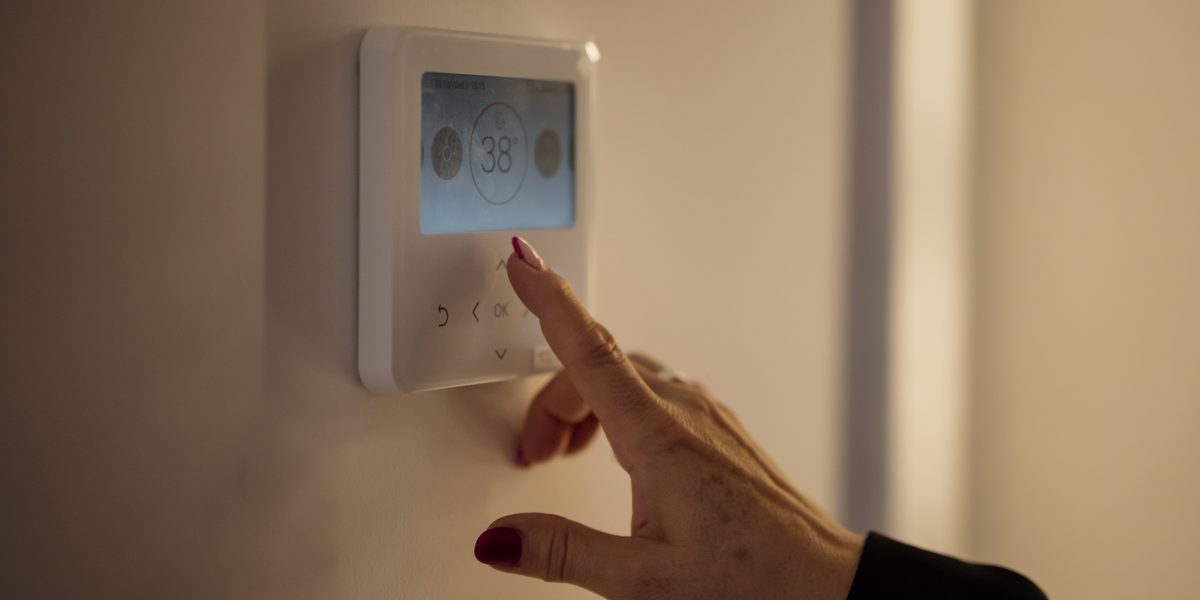
Heating and cooling dominate most home energy use, which makes the thermostat the single most powerful energy habit in the house. The core principle is simple: condition the home for the people in it, not for empty rooms and sleeping hours. Nudging the setting a few degrees toward the season, cooler in winter, warmer in summer, while you sleep or while the house is empty saves meaningfully over a year, and a programmable or smart thermostat automates the discipline so comfort never depends on memory.
Resist the myth that cranking the dial heats or cools faster; systems run at one speed, and extreme settings just overshoot. Layer the low-tech helpers too: socks and a sweater in winter, ceiling fans in summer spinning counterclockwise to create a breeze, and reversed in winter to push warm air down. A fan lets most people set the thermostat several degrees warmer in summer with no loss of comfort, and fans cost pennies to run.
Let the Sun and Curtains Work Shifts
Windows are a free heating and cooling system if you operate them deliberately. In winter, open curtains and blinds on sun-facing windows during the day to harvest free heat, then close them at dusk so the fabric works as insulation against the night. In summer, run the opposite shift: block the strongest sun during the day, especially on west-facing glass, and open windows in the evening when outdoor air cools, letting a cross-breeze flush the day's heat out.
Thick curtains, cellular shades, or even a well-fitted blind measurably slow heat moving through glass in both directions. The habit costs ten seconds twice a day and turns every window from a weak point into an asset.
Hunt Down Phantom Loads
A modern home sips electricity all night through devices that are technically off. Chargers, game consoles, televisions, cable boxes, printers, and countless small adapters draw standby power around the clock, and together this phantom load is a real slice of many electric bills. The fix is consolidation: group clusters of electronics, the entertainment center, the desk setup, the charging drawer, onto power strips, and switch off the whole strip when the cluster is not in use. Smart plugs do the same on a schedule.
Walk the house once with fresh eyes and unplug the stragglers: the spare fridge chilling three cans in the garage, the rarely used printer, the charger warming an empty nightstand. If a device feels warm while doing nothing, it is spending your money to do it.
Run the Kitchen Smarter
The kitchen rewards matching the tool to the job. Small appliances, the microwave, toaster oven, air fryer, electric kettle, use far less energy than heating the full oven for small portions, and a lidded pot boils dramatically faster than an open one. When the big oven does run, skip preheating for slow-cooked dishes, resist peeking (every door opening dumps heat), and bake more than one thing while it is hot.
The refrigerator earns habits of its own since it never stops running: keep it reasonably full so it holds cold better, let leftovers cool briefly before they go in, check that door seals grip a sheet of paper snugly, and vacuum the coils once or twice a year. Run the dishwasher only when full and let dishes air-dry instead of using heated drying, modern machines clean well on efficiency settings, and the air-dry habit alone trims every single cycle.
Rethink Laundry and Hot Water
Water heating is one of the largest hidden energy draws in a home, so the best laundry habit is simple: wash in cold. Modern detergents are formulated for it, and most loads come out identical while skipping the most expensive part of the cycle. Wash full loads rather than frequent small ones, clean the lint filter every time, and when weather or space allows, let a drying rack or clothesline replace the dryer, the most energy-hungry appliance in many homes, for even part of the laundry.
Beyond the laundry room, trim hot water use at the source: shorter showers, a water heater set to a warm-but-not-scalding level, and low-flow showerheads that maintain pressure while halving the hot water drawn. Insulating an older water heater and the first stretch of hot pipe is a cheap afternoon project that pays back quietly for years.
Seal the Leaks You Can Feel
No habit survives a drafty envelope, because sealed air is saved energy. On the next windy day, do the hand test around doors, windows, outlets on exterior walls, and the attic hatch; where you feel moving air, you are paying to condition the outdoors. The fixes are weekend-simple:
- Weatherstripping around door frames and operable windows.
- Door sweeps or draft stoppers at exterior door bottoms.
- Caulk at gaps around window trim and where pipes and cables enter walls.
- Foam gaskets behind outlet and switch plates on exterior walls.
- Closed damper discipline: a fireplace flue left open is a hole in the roof.
None of these requires skill beyond a steady hand, and together they make every heating and cooling habit above work harder.
Make Efficiency the Default
The most durable savings come from decisions you make once. Swap remaining old bulbs for LEDs, they use a fraction of the energy and last for years, and put outdoor and accent lighting on timers or motion sensors so nothing burns all night. Set computers and consoles to sleep automatically, and choose efficiency modes on appliances as the standing default rather than the exception.
Then make the household part of it: lights off when leaving a room, doors closed to unused spaces, vents unblocked by furniture. When the efficient choice is the automatic one, saving energy stops requiring willpower at all, and that is when the bill changes for good.
Measure, Then Involve the Whole Household
Habits stick faster when you can see them working. Start by actually reading your utility bills, most show usage history by month, and watching the trend after you adopt a few changes turns an abstract virtue into a visible scoreboard. An inexpensive plug-in power meter makes it concrete at the device level, revealing exactly what the old freezer or the always-on console costs to run; many utility companies also offer free or low-cost home energy checkups that pinpoint the biggest leaks in your specific house.
Then recruit everyone who flips a switch. Energy habits fail when one person polices the whole household, and they succeed when the defaults are shared: a quick family walkthrough of what changed and why, a reminder sticker at eye level by the most-forgotten light, and letting kids own a job like checking that doors close or strips get switched off. Celebrate the lower bill when it comes, the feedback loop is the habit-former. A household that saves energy together keeps saving when any one member forgets.
Final Thoughts
Saving energy at home is rarely about sacrifice; it is about ending waste you never noticed. Let the thermostat follow your real schedule, work the curtains with the sun, cut the phantom loads, run the kitchen and laundry with intent, and seal the drafts that undermine everything else. Each habit is small on its own, but a household runs on repetition, and repetition is exactly where these habits earn their keep, month after month, season after season.