The entryway is the hardest-working few square feet in any home. Everything the household wears, carries, and receives passes through it twice a day, and whatever lands there sets the tone for every room beyond. That is why a cluttered entry makes a whole clean house feel chaotic, and why an orderly one makes even a modest home feel composed. The good news: entry chaos is not a discipline problem, it is a design problem. Give every incoming item an obvious home and the space largely keeps itself.
Watch How Your Household Actually Arrives
Before buying a single hook, observe a week of real arrivals. Which door does everyone actually use? Where do shoes land, where do bags get dropped, where does mail pile up? Those landing spots are data. Organizing systems fail when they fight natural behavior, a beautiful coat closet six steps from the door will lose every time to the newel post two steps away.
Design for the door people really use, which in many homes is the garage or side door, not the formal front entry. And count honestly: how many coats per person per season, how many pairs of shoes in rotation, how many bags, leashes, and bats come and go. The system has to fit the real volume, not the aspirational one.
Give Every Person a Zone
Shared bins breed anonymous piles; personal zones create ownership. Assign each household member their own territory, a cubby, a section of bench, or simply a vertical slice of wall with their hooks and a basket below. Children keep their zone usable when hooks sit at their height; a row they can actually reach converts more coats from floor to wall than any amount of reminding.
A labeled bin or basket per person catches the small stuff, hats, gloves, sunglasses, the pocket contents that otherwise scatter. The one-zone rule also makes limits self-enforcing: when a cubby overflows, that person's gear gets edited, not expanded into a sibling's space.
Solve Shoes First
Shoes generate more entry chaos than everything else combined, so give them the most deliberate solution. The key principle is limiting how many pairs live at the door: one or two in-rotation pairs per person, with the rest stored in closets. For the pairs that stay, choose the format that fits your space, an open rack or shelf unit for speed, a bench with cubbies for seated changes, or a slim tilt-out cabinet when shoes need to disappear visually in a tight hall.
A boot tray is non-negotiable in wet and snowy seasons; it protects floors and corrals drips in one washable place. And include seating of some kind, a bench, a stool, even a sturdy chair, because a place to sit while changing shoes is the difference between shoes put away and shoes kicked toward a corner.
Build the Drop Zone for Small Essentials
Keys, wallets, phones, mail, and the daily pocket-dump need a dedicated station or they will colonize the nearest flat surface, and then the kitchen counter after that. The classic solution is a slim console or wall shelf with:
- A tray or bowl for keys and wallets, one habitual spot ends the morning key hunt forever.
- A mail slot system with at most three categories: action needed, to file, and recycling, with the recycling bin close enough to use instantly.
- A charging spot for phones and earbuds, with the cable already in place.
- A small catch-all for sunglasses, lip balm, and transit cards.
Process mail standing at this station, the moment it enters, rather than letting it migrate inward. Most of it should never make it past the entry.
Use the Walls and the Back of the Door
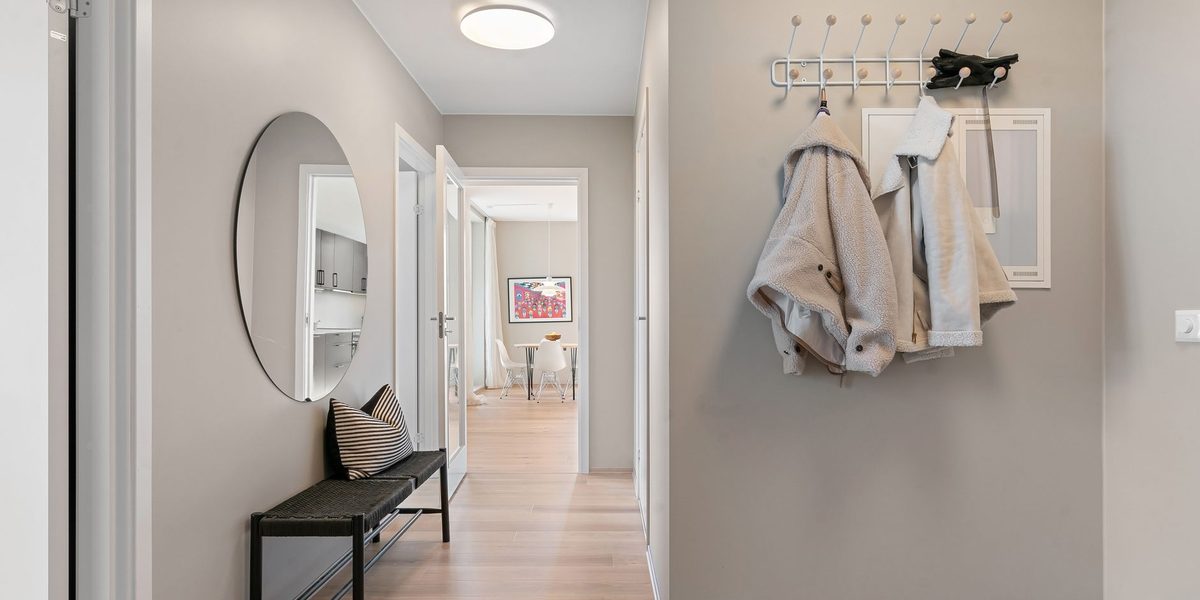
Entryways are usually short on floor and rich in ignored vertical space. Sturdy hooks beat hangers for daily coats and bags because they take one second to use, and one-second systems are the ones that survive. Mount a double row, high for adults and guests, low for kids, and add a shelf above the hooks for baskets holding off-season or overflow gear.
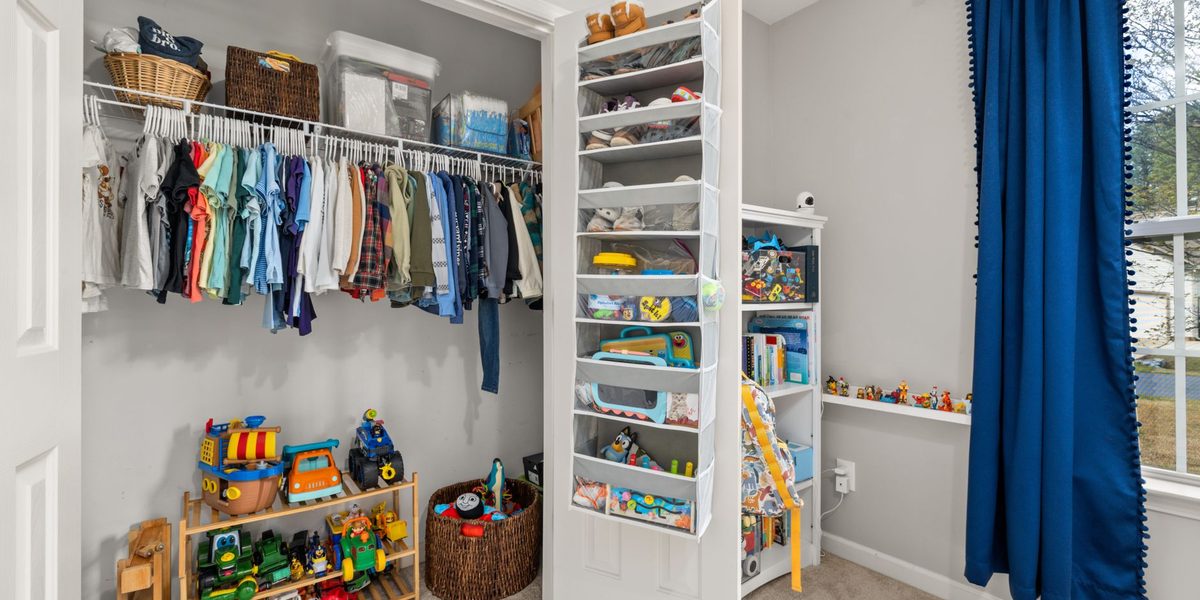
The back of a closet or entry door multiplies storage for free: an over-door organizer holds gloves, dog leashes, sunscreen, and umbrellas in labeled pockets. A small wall mirror earns its spot twice, for the last look on the way out and for bouncing light around what is often the darkest spot in the house. If there is room, a message board or family calendar makes the entry the household's information hub as well as its loading dock.
Plan for Seasons and for Mess
An entry organized for one season fails in the next. Twice a year, rotate: winter coats, boots, hats, and gloves swap with sun hats, sandals, and ball gear, with the off-season set moving to higher shelves or deeper closets. Keeping only the current season at the door cuts the visible volume in half and makes the daily system faster.
Design for dirt, too, because the mudroom's whole job is absorbing it. A tough washable rug or mat inside, a bristled mat outside, durable flooring or a runner over delicate floors, and a small handheld vacuum or broom stationed nearby turn grit from a crisis into a thirty-second cleanup. Households with pets benefit from a towel hook and a bin for leashes and wipes right at the threshold.
Add the Habits That Keep It Working
Even a well-designed entry needs two small rituals. The first is the nightly one-minute reset: shoes to the rack, coats to hooks, stray items into their person's bin. Done daily, it never becomes a project. The second is a monthly edit, pull what has accumulated, return strays to their real homes, and purge the broken umbrella and the single glove.
Make the system visible to everyone who uses it. Labels on bins, a hook per person, and a shared understanding that the floor is not storage turn order from one person's chore into the household default.
No Mudroom? Make One From a Wall
Plenty of homes have no dedicated entry space at all, the front door opens straight into the living room, or the side door lands in the kitchen. The solution is to build a mudroom's functions into a few feet of wall. A narrow bench or storage ottoman, a row of hooks above it, a boot tray below, and a shelf or floating cabinet for the drop zone reproduce the entire system in the footprint of a bookcase. Freestanding hall trees combine all of it in one piece for renters and tight budgets.
If even wall space is scarce, think inside the nearest closet. Removing the rod from a coat closet and fitting it with hooks, cubbies, and a shoe rack converts it from a place where coats go to be forgotten into a true working entry. The measure of success is the same as any mudroom's: can a tired person unload everything they are carrying in under thirty seconds, without a single item landing on the floor or the nearest counter? If yes, the house has a mudroom, whatever the floor plan says.
Final Thoughts
An entryway that stays orderly is simply one where the easiest action and the correct action are the same: hooks faster than the floor, a tray more obvious than the counter, a bin for every category that actually arrives. Observe how your household really comes and goes, build zones to match, rotate with the seasons, and close each day with a sixty-second reset. The space will hold its order, and the whole house inside it will feel calmer for it.