Almost everyone has organized a pantry at least once, and almost everyone has watched that beautiful arrangement dissolve within a month. Bags get shoved wherever they fit, duplicates multiply, and the deep corners quietly become archaeology. The problem is rarely effort; it is that most pantry makeovers are designed for the photo on day one rather than for the hundredth hurried grocery unload. A pantry that stays organized is built around how your household actually shops, cooks, and snacks, with systems forgiving enough to survive a busy week. Here is how to build one.
Empty Everything and Face the Facts
Lasting organization starts with a full reset. Take every single item out of the pantry, wipe the shelves, and group everything on the counter or table by type: baking, grains and pasta, canned goods, breakfast, snacks, oils and condiments, and so on. This step is tedious and absolutely non-negotiable, because it shows you the truth about your pantry: how much you really own, what you buy repeatedly without realizing, and what has quietly expired.
Be ruthless in the sort. Discard anything expired or stale, set aside unopened items you will realistically never use for a food donation box, and combine duplicate open packages. Most households discover they have been storing a surprising amount of food they will never eat, occupying the exact prime shelf space their everyday items need. The piles that remain tell you precisely what your system must hold, which beats guessing or copying someone else's pantry layout.
Zone the Pantry Like a Small Store
Grocery stores put popular items at eye level and group related products together because it works, and the same logic organizes a pantry. Assign every category from your sort a zone, then place zones by frequency of use. Daily items, breakfast foods, snacks, the coffee setup, belong at eye level and reaching height. Cooking staples like pasta, rice, canned goods, and oils sit just above or below. Heavy items, bulk backstock, and appliances live on the floor or lowest shelf, while rarely used entertaining and holiday supplies go up top.
Give kids their own zone at their own height. A low shelf or bin of approved snacks lets children serve themselves without excavating other zones, and it gives you one glance to see what needs restocking. Zones only hold if everyone in the house knows them, so keep categories broad and obvious. Five intuitive zones beat fifteen precise ones that only their creator understands. If your pantry is a cabinet rather than a closet, the same thinking applies at smaller scale: one shelf per broad category, with the most-used shelf at the easiest height.
Choose Containers for Function, Not Just Looks
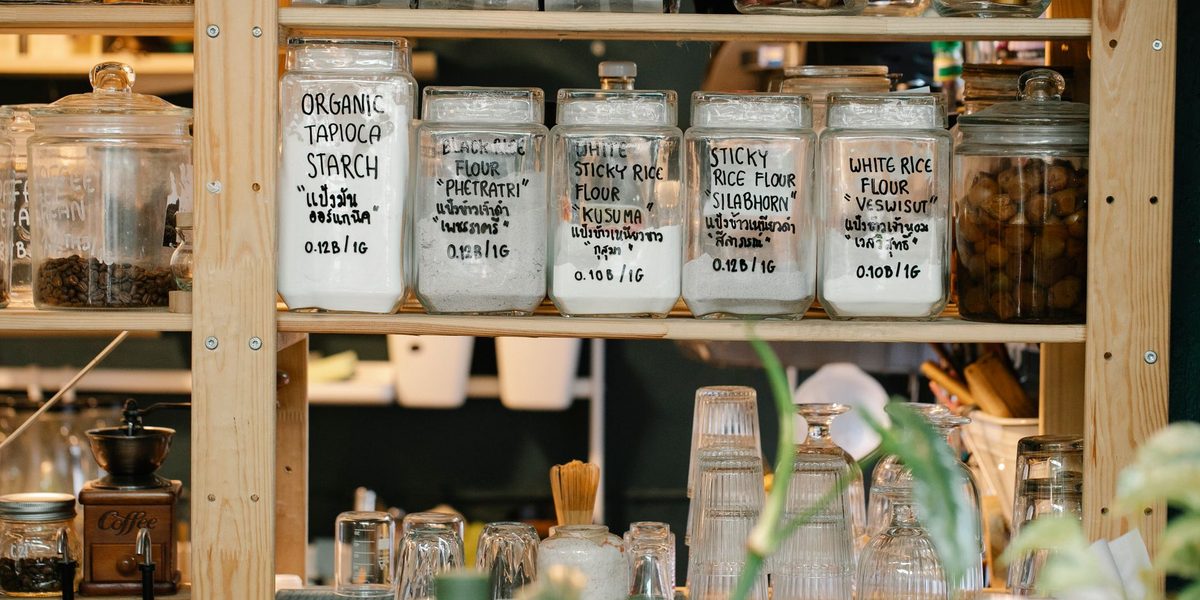
Decanting everything into matching jars photographs beautifully, but containers earn their place by solving actual problems: staleness, spills, pests, and wasted space. Prioritize airtight containers for items that genuinely benefit, flour, sugar, rice, cereal, pasta, and anything in a flimsy bag that will not reseal. Square and rectangular containers use shelf space far more efficiently than round ones, and clear sides mean you can see quantity at a glance.
Resist the urge to decant everything. Items used up quickly, or packaged in sturdy resealable containers, can stay as they are inside a bin for their category. Bins are the workhorses of a lasting pantry: they turn deep shelves into pull-out drawers, corral odd-shaped packets, and move as a unit when you need what is behind them. A few other tools punch above their weight:
- Tiered risers so every can and jar label is visible at once
- Turntables for corner spaces and clusters of oils, vinegars, and sauces
- Shelf risers that double usable height where shelves are far apart
- Door-mounted racks for spices, foils, wraps, and small packets
Label Everything, Including the Shelves
Labels are what transfer your system from your head to your household. Label containers with contents, and where useful, add cooking ratios or dates. More importantly, label the zones themselves, on the shelf edge or the bins, with plain words like Breakfast, Pasta and Grains, Snacks, and Baking. Shelf labels are the difference between a system only you can maintain and one where anyone who unloads groceries can put things where they belong.
Keep labels simple and easy to update. A label maker, chalk markers on reusable tags, or plain printed stickers all work; what matters is that changing a category does not feel like a project. When a label stops matching reality, update the label or the contents the same week, because every mismatch quietly teaches the household that the labels do not matter.
Build a First-In, First-Out Habit
Food waste and clutter share a root cause: new groceries landing in front of old ones until the back row expires in the dark. Borrow the grocer's rule of first in, first out. When unloading, slide older items forward and place new purchases behind them. Risers and clear bins make this nearly automatic, since you can see what is lurking in the second row.
Add an Eat Me First basket at eye level for open packages and items approaching their dates, and check it when planning meals or packing lunches. Keep backstock, the extra jars and multi-pack surplus, in its own clearly separated zone rather than mixed into the daily shelves. When the daily shelf runs out, you shop your backstock first, which is the habit that stops duplicate buying for good.
Design the Reset Into Your Routine
No pantry stays perfect, and lasting organization depends on accepting that. Busy weeks will scramble the shelves, and the system's real test is how quickly order returns. Schedule a five-minute reset at a natural moment, right before the weekly grocery trip is ideal, to return strays to their zones, consolidate open packages, and jot what is running low. Because everything has a labeled home, the reset is quick enough that it actually happens.
Once or twice a year, do a deeper refresh: pull items forward, wipe shelves, reassess zones against how your household has changed, and cull again. New eating habits, a new family member, or a new appliance can shift what deserves prime real estate. The pantry should evolve with the household, not freeze in its day-one layout.
Shop With the System in Mind
A lasting pantry changes how you buy groceries, and that change protects the organization. Shop from a list built off the running low notes and a quick scan of the shelves, and be honest about space before bulk purchases: a bargain that does not fit becomes clutter the moment it comes home. If a new purchase has no zone, either make room deliberately or let it live in backstock until space opens.
Unloading groceries becomes part of the system too. Items go straight to their zones, new behind old, bags broken down immediately. Ten disciplined minutes after shopping preserves hours of organizing work and keeps the pantry trustworthy, which is the entire point, because a pantry you trust is one you stop overbuying for.
Final Thoughts
Pantry organization that lasts is a system, not a makeover. Empty everything and let the real contents define the plan, zone shelves by frequency, and choose containers and bins that solve problems rather than decorate. Label zones so the whole household can maintain them, rotate stock so nothing dies in the back row, and build a tiny recurring reset into your week. Do this once, properly, and you will never need another dramatic pantry overhaul, just a shelf that quietly works every single day.