Most garages follow the same sad cycle: a heroic weekend purge, a few weeks of order, then a slow slide back into a maze of boxes, bikes, and mystery cords until the car sleeps in the driveway again. The problem is rarely the cleanup; it is that the organization was never designed to absorb real life, the seasonal gear swaps, the half-finished projects, the stuff that arrives faster than it leaves. A garage that stays organized needs systems that expect all of that. Here is how to build one that still works twelve months after you set it up.
Empty It and Sort With Cold Honesty
Lasting garage order starts the same way every serious organizing project does: everything comes out. Pick a dry weekend, pull the contents into the driveway, and sort into keep, donate, sell, trash, and the crucial fifth pile, belongs elsewhere, for the household overflow that drifted into the garage because nobody decided otherwise. Sweep the empty space, note any moisture or pest issues, and look at the bare walls and ceiling, because that is where most of your storage is about to go.
Be ruthless with the classic garage squatters: dried-up paint and chemicals, the broken gear awaiting repairs that will never happen, duplicate tools, outgrown sports equipment, and parts for things you no longer own. Dispose of hazardous materials properly through local collection programs rather than the trash. A good rule for the fence-sitters: if it has not been touched in a couple of years and costs little to replace, it does not earn garage space, which is some of the most contested square footage in the house.
Zone the Space Around How You Actually Live
Garages fail when storage is placed wherever things fit instead of where activities happen. Map zones first, then assign storage. Park-and-walk paths stay clear, full stop, including door swings and the walkway into the house. Frequently used zones, trash and recycling, everyday tools, the gear you grab weekly, belong near the doors. Project zones like workbenches need clearance and lighting, and long-term storage climbs the walls and ceiling at the back and sides.
Typical zones worth marking out before you install anything:
- Everyday launch zone near the house door for the items that leave and return daily
- Tools and workbench with the most-used tools visible, not boxed
- Sports and outdoor gear at heights the actual users can reach
- Lawn and garden with sharp tools hung and chemicals locked up high
- Seasonal and archive storage overhead or on the highest shelves
Chalk the zones on the floor or tape them on the walls before buying a single rack. The layout is the system; shelving is just furniture for it.
Get Everything Off the Floor
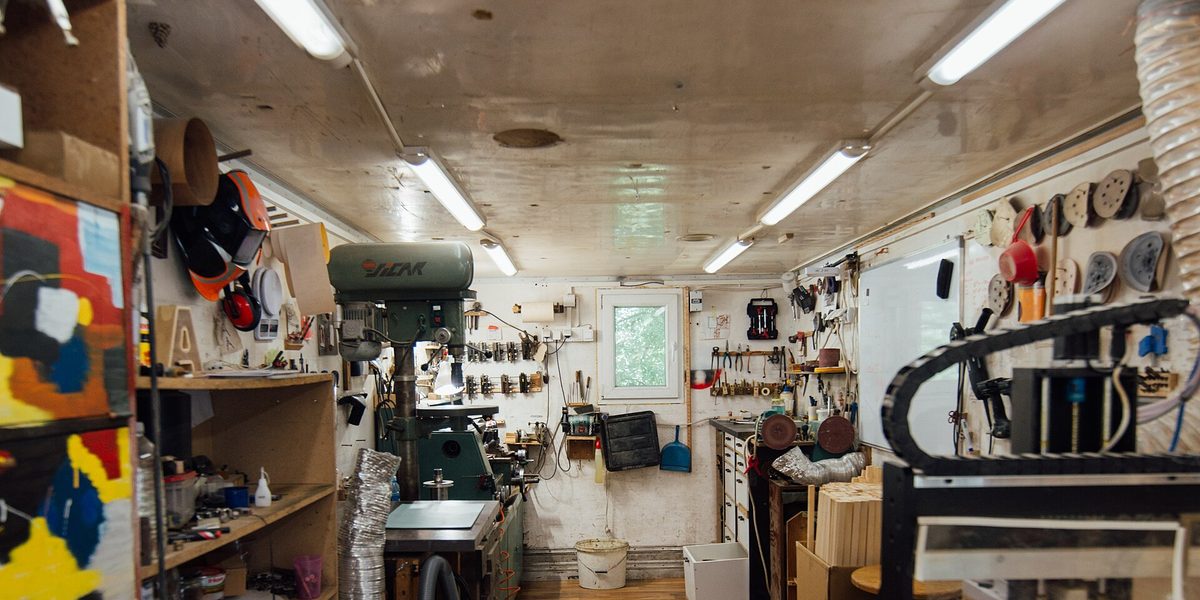
The floor is for vehicles, feet, and wheeled things, and almost nothing else. Every item stored on the floor becomes an anchor for the next pile, so the central rule of a durable garage is vertical storage. Sturdy shelving units handle bins and boxes, wall rail systems with movable hooks adapt as your gear changes, and pegboard or slatwall keeps hand tools visible and accountable, with each tool's home traced so it is obvious when something is missing.
Heavy and awkward items have proven solutions: wall hooks or pulley lifts for bikes, racks for ladders mounted sideways along a wall, and ceiling-mounted platforms over the garage door for the lightest, least-used bins. Mind weight ratings and stud mounting on everything overhead, and keep a safe landing zone free beneath ceiling storage. When the floor is clear, cleaning takes minutes, pests lose their hiding spots, and clutter has nowhere to quietly begin.
Use Bins Like a Warehouse, Not an Attic
Cardboard sags, invites moisture and pests, and hides its contents, which is how garages fill with boxes nobody can identify. Replace it with uniform, stackable plastic bins, clear where possible, and label every bin on the side that faces outward, naming contents specifically: not Misc, but Camping Cook Gear or Holiday Lights Exterior. Uniform sizes stack safely and make shelving predictable; a couple of standard footprints beat a jumble of shapes.
Resist filling every bin and every shelf. Leave genuine empty capacity, a spare bin or two and a stretch of open shelf, because the system must absorb new arrivals without a redesign. An inbox shelf near the house door catches the unsorted, returns, donations in waiting, items that need a decision, and gets cleared on a schedule. Overflow is not a failure of discipline; it is a design input. Plan for it and the system bends instead of breaking.
Rotate With the Seasons Instead of Fighting Them
The garage is the most seasonal room you own, and the systems that survive the year are the ones that expect the contents to change. Twice a year, in spring and fall, run a thirty-minute rotation: the incoming season's gear moves to the accessible front and reachable hooks, and the outgoing season's gear is cleaned, maintained, and moved up and back. Snow shovels and sleds trade places with garden tools and coolers; the bins swap heights, not homes.
Fold maintenance into the rotation so gear comes out ready: drain and store hoses, run fuel out of seasonal equipment or stabilize it, wipe and oil tools before they hibernate, deflate and check sports gear. Pair the rotation with a ten-minute cull of anything that proved useless all season. Because the rotation is small and scheduled, it actually happens, and it is the single habit that most prevents the annual relapse.
Protect the Space Itself
Organization decays fast in a garage that is dim, damp, or unpleasant to be in. Bright, even lighting, modern shop fixtures are inexpensive, changes the room from a cave you avoid into a workspace you maintain. Weatherproof the garage door seal and any windows, and get moisture under control with airflow or a dehumidifier if the space runs damp, because humidity ruins tools, cardboard, and anything fabric.
Think about safety as part of the system: chemicals and sharp tools high or locked away from children, fuel stored properly in approved containers, a fire extinguisher mounted by the door, and clear access to the electrical panel and water shutoff if they live in the garage. A garage that is safe and pleasant gets used correctly, and a garage that gets used correctly stays organized.
Adopt the Habits That Do the Maintaining
No storage product survives bad habits, and only two habits really matter. First, everything returns to its labeled home the same day it is used, which takes seconds when the home is obvious and marked. Second, one in, one out for the big categories: a new bike, tool, or cooler means an old one leaves. Teach the household the zones and labels, because a system only one person understands is a system with a single point of failure.
Then schedule the resets: ten minutes monthly to clear the inbox shelf and return strays, and the two seasonal rotations. Put them on the calendar like any other appointment. The entire annual maintenance cost of a well-designed garage is a few hours, which is roughly what the old cycle demanded every single month.
Final Thoughts
A garage that survives the year is designed, not just cleaned. Empty it honestly, zone it around real activities, move storage up the walls and overhead, and label bins like a warehouse manager. Leave room for overflow, rotate with the seasons, keep the space bright and dry, and let two small habits and a couple of calendar reminders do the maintenance. Do that once, properly, and next year's spring cleaning will be a pleasant formality, with the car sleeping indoors where it belongs.