Have you ever walked into a room and felt like the air was completely dead? We have all been there. You spend hours indoors staring at screens, surrounded by synthetic furniture and drywall, wondering why you feel drained by mid-afternoon. It turns out your body is craving nature. Designers call this biophilic design, but in plain English, it just means human beings function much better when they are surrounded by living things.
Bringing houseplants into your living space does far more than just look nice on social media. Plants act as natural air filters, absorbing common household toxins like formaldehyde, benzene, and xylene that off-gas from carpets, paint, and upholstery.¹
NASA famously figured this out when studying closed environments, recommending at least one medium-to-large plant for every 100 square feet of indoor space.¹ Beyond cleaning the air, leafy companions can boost local humidity by 5% to 10% during dry winter months and lower stress levels by up to 15%.² So how do you get started without turning your living room into a plant graveyard? The secret is matching the right plant to the specific lighting, humidity, and airflow of each individual room.
The Living Room: Making a Statement with Greenery
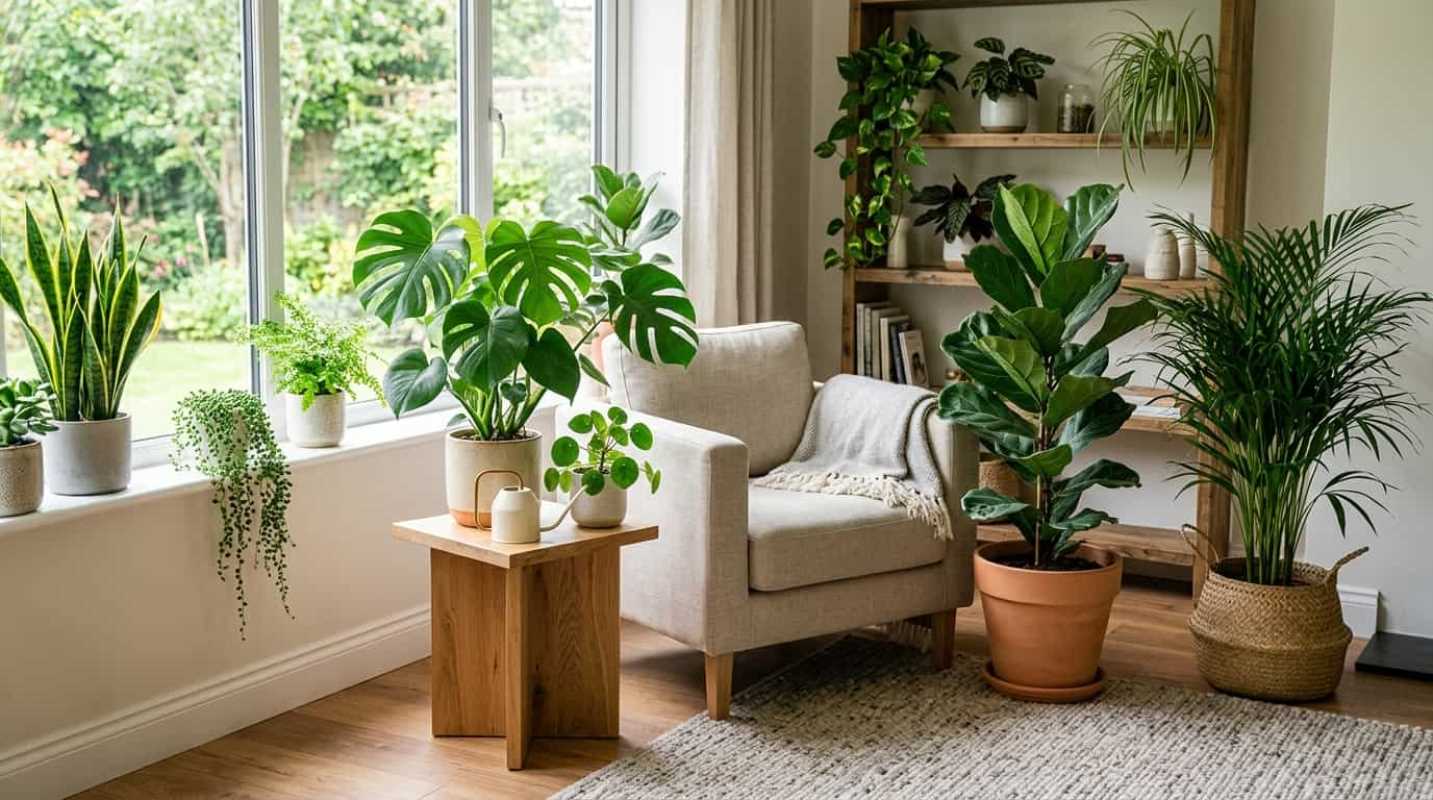
Your living room is usually the central focal point of your home. It is where your family gathers, where guests hang out, and where off-gassing from synthetic couches and synthetic rugs is highest. That makes it the ideal spot for statement plants with plenty of surface area to purify shared air.
If you have a large open corner near a window, consider a tall structural plant like a Parlor Palm or a Cast Iron Plant. These species give you a lush tropical feel without demanding intense direct sunlight. If you want something that cascades down a bookshelf or mantel, Golden Pothos is almost impossible to kill and grows long, leafy vines quickly.
To get the most out of your living room plants, try grouping them together in clusters of three to five instead of scattering them far apart.
• Microclimate Creation: Clustering plants together raises surrounding humidity through collective moisture release, making it easier for tropical plants to thrive.
• Improved VOC Uptake: More foliage surface area in one spot means faster absorption of household air pollutants.
• Visual Impact: Mixing tall upright plants with trailing vines creates natural depth that fills empty corners effortlessly.
Kitchen and Bath: Humidity-Loving Varieties
Kitchens and bathrooms present unique indoor climates because they experience sharp spikes in humidity and temperature throughout the day. Instead of fighting those moist environments, you can use them to your advantage by hosting tropical species that crave extra moisture.
In the bathroom, steam from your daily shower creates an ideal habitat for ferns and lilies. A Boston Fern or Peace Lily placed on a ledge or shelf will happily soak up ambient moisture through its fronds. That moisture absorption actually helps keep airborne mold spores in check. Just remember that because bathroom air stays humid, soil evaporates water much more slowly. Always check the top two inches of dirt with your finger before watering so you do not accidentally rot the roots.
In the kitchen, gas ranges release trace emissions while cabinets off-gas formaldehyde. Spider plants thrive in kitchen environments because they excel at processing airborne chemicals, and they are completely safe if you have curious pets.
• Boston Fern: Thrives near showers, absorbing ambient steam and suppressing mold spores.
• Peace Lily: Filters harsh household chemicals while blooming flowers even in lower light.
• Spider Plant: Perfect for hanging near kitchen windows or open shelving clear of stove heat.
The Bedroom Sanctuary: Low-Light Options for Better Sleep
Your bedroom should be a place of quiet recovery. But bedrooms often pose a light challenge. Between heavy curtains, blinds, and north-facing windows, bedrooms frequently fall into the low-light range of 50 to 250 foot-candles.³
Many people assume plants release carbon dioxide at night and should be kept out of sleeping areas. Although most plants do pause oxygen production in the dark, specialized species operate on a different cycle.
The Snake Plant uses a unique process called Crassulacean Acid Metabolism. It opens its leaf pores at night to absorb carbon dioxide and release fresh oxygen while you sleep. Placing a Snake Plant three to six feet from your bed creates a cleaner micro-environment for rest.
Another great choice for bedrooms is the ZZ Plant. It stores water in subterranean rhizomes, making it resilient if you travel frequently or forget to water it for weeks at a time.
Mastering Plant Care From Beginner to Pro
Keeping plants alive is not about having a secret green thumb. It is simply about understanding light and water dynamics. Here are the core rules every indoor gardener needs to know.
Our human eyes automatically adjust to dark rooms, making spaces look much brighter to us than they actually look to a plant. What feels bright enough for reading might actually be a dim survival zone for a plant.³
• Light Accuracy: Low-light plants require 50 to 250 foot-candles of light for 10 to 12 hours every day to maintain health.³
• The Watering Rule: Less light means less photosynthesis, which means the plant drinks far less water. Always cut your watering frequency by 30% to 50% during autumn and winter.
• Dust Control: A layer of indoor dust on broad leaves can block light absorption by up to 30%. Wipe down broad leaves once a month using a damp cloth.
It is also important to keep pet safety in mind. Although Spider Plants, Cast Iron Plants, and Boston Ferns are ASPCA-approved non-toxic options, popular plants like Snake Plants, ZZ Plants, and Peace Lilies are toxic to dogs and cats if chewed on. Keep toxic varieties on high shelves or hanging planters well out of reach.
Building Your Personal Indoor Jungle
You do not need to turn your whole home into a botanical garden overnight. In fact, starting with too many plants at once usually leads to overwhelm and dead greenery.
Start small. Pick one resilient plant, like a Snake Plant for your bedroom or a Golden Pothos for your living room shelf. Get comfortable reading its signals, watching how fast its soil dries out, and cleaning its leaves.
Once you see how much life and color a single plant adds to a quiet room, adding a second or third comes naturally. Tending to indoor plants becomes a grounding daily routine, giving you a tangible connection to nature right inside your home. Take the first step today. Pick a simple low-light pot, and watch your indoor space transform.
Sources:
1. Purified Air Duct Cleaning
https://www.purifiedairductcleaning.com/post/the-8-best-plants-for-indoor-air-quality-in-2026-breathe-easier-today
2. Marcum's Nursery
https://marcumsnursery.com/nasa-approved-plants/
3. University of Illinois Extension
https://extension.illinois.edu/houseplants/lighting