Have you ever walked through your home and wondered why you have entire rooms you haven't stepped into since last Thanksgiving? You're definitely not alone. Every single day, roughly 12,000 Americans turn 65, and a huge number of them are asking that exact same question.¹ Baby Boomers now make up 42% of home buyers and 53% of sellers in today's market.² But downsizing isn't just for retirees anymore. Younger adults and growing families are making the shift too, driven by high housing costs and a real desire to simplify their daily lives.
When you start thinking about moving into a smaller footprint, it's easy to feel like you're giving something up. You might worry about losing square footage, shedding closet space, or leaving behind familiar spaces. Downsizing is actually about gaining something far more valuable: time, financial flexibility, and total peace of mind.
Think about the financial side for a moment. Trading a larger house for a smaller, more efficient home can yield average national savings of over $200,000.³ That is real money back in your bank account. Your monthly heating and cooling bills plummet. Property taxes and maintenance expenses drop right along with them. Instead of spending your weekends mowing a massive lawn or cleaning empty guest rooms, you get your time back. Living in a manageable, thoughtfully curated space brings a quiet psychological relief that no extra square footage can match.
The Freedom of Less: Why Downsizing Is the Ultimate Lifestyle Upgrade
So why is the actual process of downsizing so tough? It rarely comes down to the physical packing boxes. The real hurdle is our deep emotional attachment to things.
We tend to see our possessions as extensions of our personal identity. That suit in the back of your closet isn't just wool and thread. It represents the height of your professional career. That heavy mahogany dining set isn't just timber. It's a stand-in for every holiday dinner you ever hosted. Letting go of those items can feel like letting go of past versions of yourself.
Designer Rita Wilkins calls these items identity clutter. To move forward, ask yourself one simple question: Would I buy this again for the life I live today? Giving yourself permission to honor who you were without turning your new home into a museum for your past is incredibly freeing.
Another helpful perspective comes from Margareta Magnusson, author of The Gentle Art of Swedish Death Cleaning. She suggests viewing decluttering as an act of kindness for your loved ones. Ask yourself, "Will anyone I love be happier because I kept this?" Here is a quick reality check: younger generations rarely want inherited brown furniture, formal china sets, or heavy heirlooms. Releasing those objects now frees your family from a future logistical headache and clears the path for your next chapter.
Understanding the Emotional Attachment to Belongings
Once you are mentally ready to start sorting, you need a practical game plan. Trying to tackle your entire house in a single weekend will leave you completely exhausted. Start early so you can make decisions with a clear, calm head.
Here are a few proven techniques to help you sort through your possessions effectively:
• Focus on the 90/10 rule: Spend 90% of your initial energy on easy decisions. Expired pantry items, duplicate kitchen utensils, and worn towels carry zero emotional weight. Sorting through these builds quick momentum before you touch the 10% of items that trigger deep sentimentality.
• Apply the one-year rule: If you haven't used, worn, or thought about an item over the past 12 months, it doesn't need to take up space in your next home.
• Keep one representative item: You don't need to keep a 50-piece set of antique china to hold onto the memory of a loved one. Frame a single saucer or keep one teacup to display, then release the rest.
• Digitize paper memories: Photo albums, old letters, and childhood artwork take up endless storage space. Scan them into high-resolution digital files so you can keep the visual memories without keeping the physical bulk.
• Set boundary containers: Assign one decorative trunk or plastic bin per family member for personal keepsakes. If a new item goes into the bin, an old one must come out.
Strategic Decluttering: A Step-by-Step Approach
Moving into a smaller layout does not mean living in a cramped space. It just means you have to design smarter. Small-space modern design focuses on clear traffic paths, visual light, and smart functionality.
Start with how you move through each room. Designers recommend maintaining at least 36 inches of clear floor space along main circulation paths. If a bulky coffee table blocks your path to the balcony, swap it out for floating side tables or nesting tables that tuck away when you don't need them.
Multifunctional furniture is needed for smaller footprints:
• Storage ottomans: These act as footrests, extra seating, and hidden storage for throw blankets or games.
• Hydraulic lift beds: The mattress lifts up effortlessly to reveal massive hidden storage underneath for extra bedding and winter coats.
• Convertible dining tables: Console tables that rest against a wall can expand into full dining tables when guests visit.
To make small rooms feel open and spacious, try color drenching. Painting the walls, trim, doors, and ceiling in a single warm neutral shade blurs the sharp visual corners of a room, making the layout feel expansive. Hanging curtains directly from the ceiling down to the floor also draws the eye upward, highlighting vertical height.
Getting the Most from Your New Footprint: Smart Design and Organization
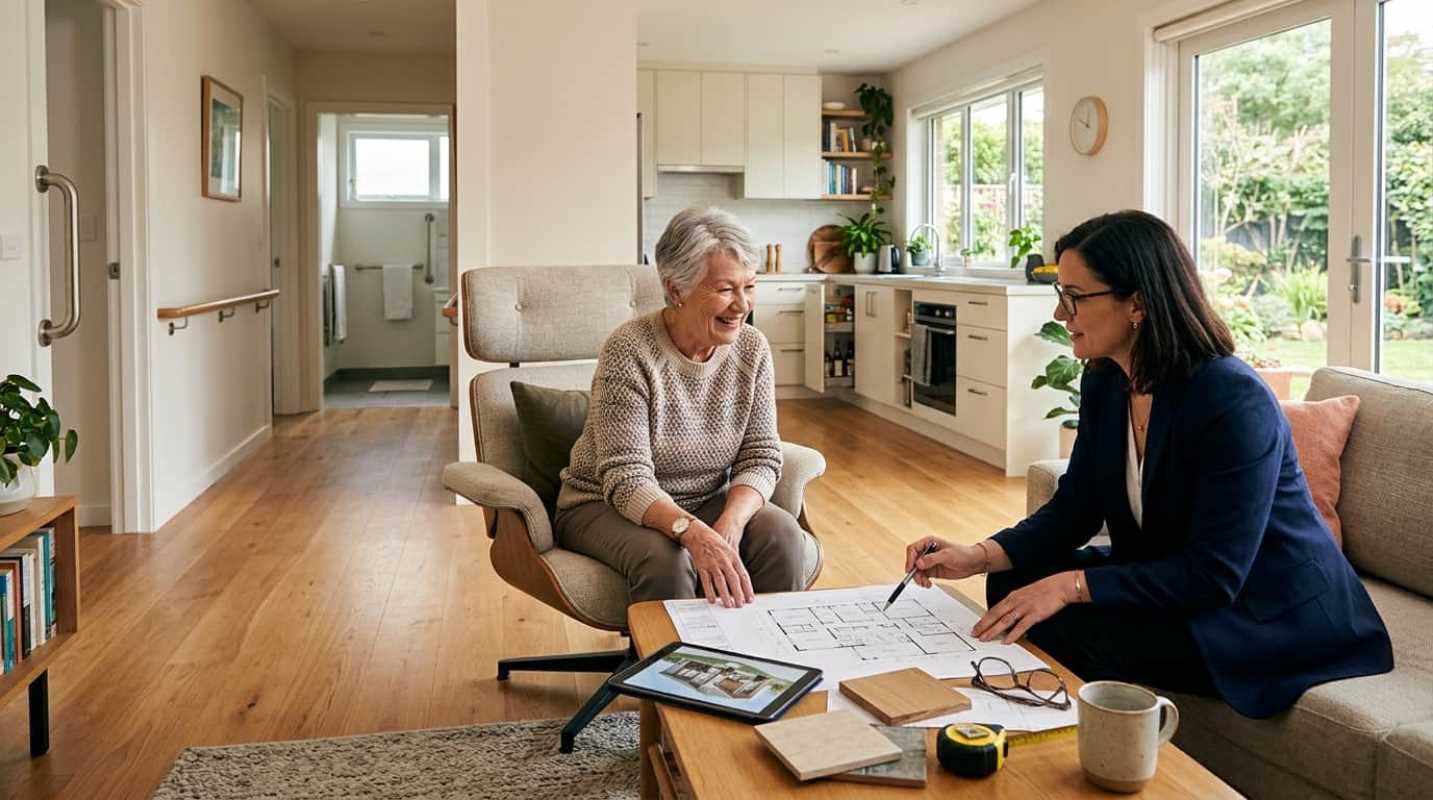
The final phase of your transition comes down to smooth logistics. Before you move a single box, get out a tape measure. Measure the exact dimensions of your new rooms and entryways. Draw a simple layout on paper to see where your existing furniture will fit.
Curate your furniture collection for your new floor plan. If your oversized sectional blocks a doorway in the new living room, sell it before moving day and buy a streamlined sofa that fits the space properly.
Moving into a smaller home is an invitation to live with more intent. When you surround yourself only with items you actually use and love, your home turns into a restful retreat rather than a storage facility for your past. Measure your space, keep what truly serves your daily routine, and enjoy the freedom that comes with a lighter footprint.
Sources:
1. William C. Huff
https://www.williamchuff.com/moving-tips-blog/important-baby-boomer-downsizing-data
2. Old Republic Title
https://www.oldrepublictitle.com/Media/egsff4v4/or3504-generational-trends-flyer-di-2025.pdf
3. Journal Record
https://journalrecord.com/2026/01/20/boomers-downsizing-financial-savings/
*This article on southermore is for informational and educational purposes only. Readers are encouraged to consult qualified professionals and verify details with official sources before making decisions. This content does not constitute professional advice.*