We all know the feeling. You buy a home, sign the papers, and feel a rush of pride. But once the keys are in your hand, a quiet reality sets in. With the median age of a U.S. home sitting at 43 years, things are bound to break. Keeping a property running smoothly is a continuous process, and the financial stakes are higher than ever.
A joint analysis by Zillow and Thumbtack reveals that the hidden costs of homeownership, including maintenance, insurance, and property taxes, have climbed to $15,979 per year.¹ That is about $1,325 a month. Out of that total, homeowners spend an average of $10,946 annually on maintenance alone.¹
So what does this actually mean?
Most of us are vastly underprepared for the real cost of upkeep. A study by Synchrony exposed a massive disconnect, showing that homeowners estimate they will spend about $70,000 on maintenance over their lifetime.² The actual cost of routine upkeep is over $339,000, and it climbs past $418,000 when you factor in major emergency repairs like HVAC or roof failures.²
According to Angi’s State of Home Spending Pulse, 48% of homeowners report that stress from mandatory home repairs has increased, and 71% have postponed a planned home project due to rising costs.³
But here is the good news. Proactive maintenance pays off. Well-maintained homes sell for an average of 10% more than neglected ones.¹ You do not need to be a professional contractor to keep your home in top shape. You just need to know what to look for and stay ahead of the game.
The Silent Efficiency Killers of HVAC and Dryer Vents
Have you ever thought about what is hiding inside your walls?
Although you probably remember to clean your dryer lint trap after every load, you might be ignoring the actual ductwork running to the outside of your house. Over time, highly flammable lint builds up in this pipe. Restricted airflow doubles your drying times, wears out your appliance, and spikes your energy bills. Even worse, clogged dryer vents are a leading cause of residential fires.
To prevent this, clean the entire length of your dryer duct at least once a year using a flexible dryer vent brush kit.
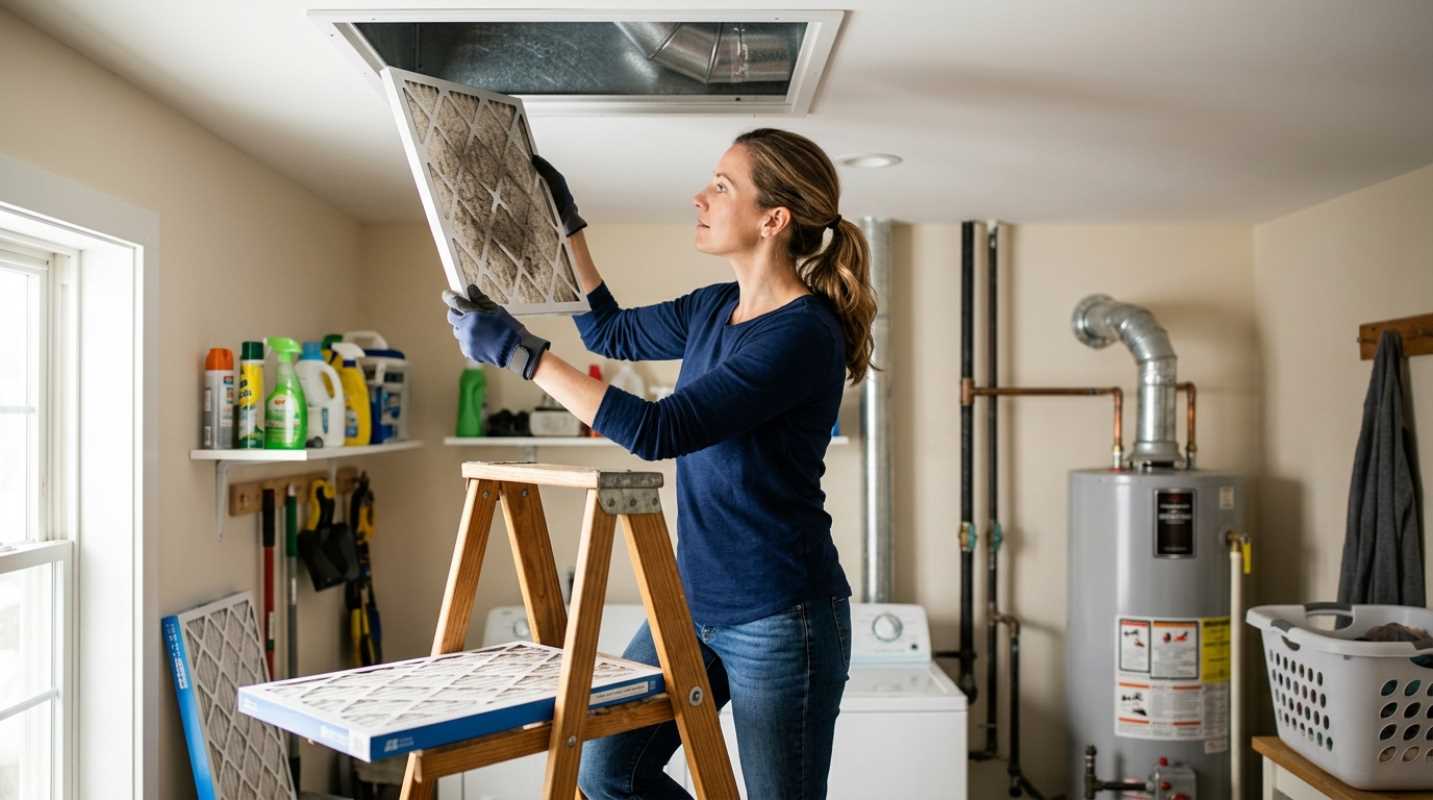
Then there is your HVAC system. Changing your filters every 90 days, or every 30 days if you have pets, is the easiest way to keep your system running smoothly. When filters get clogged, your system has to work twice as hard to push air through your home. This lowers your indoor air quality and jacks up your monthly utility bills.
If you notice weak airflow from your vents, dusty registers, or a sudden spike in your heating and cooling costs, it is time to check that filter.
Protecting Your Foundation with Gutters and Drainage
Water is a homeowner's worst enemy.
When gutters get clogged with leaves and debris, rainwater has nowhere to go. It overflows, pooling directly next to your foundation or seeping under your roofline. Although professional gutter cleaning is relatively inexpensive, repairing foundation damage averages thousands of dollars.
You can avoid this headache by cleaning your gutters at least twice a year, specifically in late spring and late fall.
Although you are up on the ladder, check your downspouts. Make sure they direct water at least four feet away from your foundation. If the water dumps right at the base of your home, you are practically inviting basement flooding and structural cracking.
Although you are outside, take a look at your windows. Most homeowners do not know that exterior window frames have tiny slots at the bottom called weep holes. They drain rainwater out of the frame track, but if they get clogged with dirt, water pools and leaks into your walls. Clear them out twice a year with a thin wire or a toothpick.
Interior Maintenance with Plumbing and Sealant Checks
Most water damage does not start with a massive flood. It starts with a tiny, silent drip.
Take a flashlight and look under your kitchen and bathroom sinks today. Slowly leaking pipes often go unnoticed for months, quietly rotting your cabinetry and creating a breeding ground for mold.
Although you are in the bathroom, take a close look at your tub and shower. Tile grout and natural stone are highly porous materials. Without a proper seal, water penetrates the surface, leading to permanent staining and water seeping behind your walls. Re-tiling a shower or replacing water-damaged drywall can cost thousands of dollars.
Apply a high-quality grout and stone sealer annually in high-moisture areas to keep water where it belongs. Also, inspect the caulk joints around your tubs, sinks, and showers. If the caulk is peeling, cracked, or moldy, scrape it out and apply a fresh bead of silicone caulk.
If you have a guest bathroom or basement wet bar that rarely gets used, run the water for 15 seconds once a month. This refills the curved P-trap pipe. If the water in that pipe evaporates, toxic and foul-smelling sewer gases can seep into your living space.
Do not forget the appliances silently working in the background. Your water heater collects sediment over time, which forces it to work harder and spikes your energy bills. Hook up a standard garden hose to the drain valve once a year and flush it out until the water runs clear.
Similarly, your refrigerator coils collect dust and pet hair. Vacuuming them every six months prevents your compressor from running constantly, saving you from a premature replacement bill.
Smoke Detectors and Safety Systems
When was the last time you tested your smoke detectors?
Pressing the test button once a month is a simple habit that can save lives. Do not just wait for the annoying low-battery chirp to replace your batteries. Make it a rule to swap them out once a year on a memorable date, like New Year's Day or daylight saving time.
Keep in mind that smoke and carbon monoxide detectors do not last forever. Most sensors degrade over time and expire after ten years. Check the manufacture date printed on the back of your devices. If they are past their prime, replace them immediately.
Although you are checking your safety systems, do not forget your GFCI outlets. These are the outlets with the buttons found in kitchens and bathrooms. Press the test button quarterly to make sure the safety mechanism is working. If the reset button does not pop out, the outlet is no longer protecting you from shocks and needs to be replaced.
Set a recurring calendar event on your phone so you never forget these life-saving safety checks.
Investing in smart technology can take the guesswork out of home maintenance.
Placing cheap, Wi-Fi-enabled water leak detectors under your sinks, near your water heater, and by your sump pump can save you a fortune. These devices send an alert directly to your phone the second they detect moisture, allowing you to stop a leak before it turns into a disaster.
Building a Sustainable House Upkeep Routine
Staying on top of home maintenance does not have to feel a lot of. Think of it like regular oil changes for your car. Consistent, small actions save you thousands of dollars over time.
To make things easy, here is a master checklist of tasks to keep your home running smoothly.
• Monthly Tasks: Check and replace HVAC filters, test smoke and carbon monoxide detectors, inspect under all sinks for slow leaks, run water for 15 seconds in unused drains, and flush guest toilets.
• Quarterly Tasks: Test your GFCI outlets, check water softener salt levels, dust ceiling fan blades, and inspect window weep holes.
• Bi-Annual Tasks: Clean your gutters, adjust downspouts, vacuum refrigerator coils, deep clean dryer vents, and schedule professional HVAC tune-ups.
• Annual Tasks: Flush your water heater, inspect your roof for damaged shingles, seal tile grout, check crawl spaces for pests, and schedule a professional pest inspection.
To fund these projects, try using the 1% to 4% rule. Save 1% to 4% of your home's total value annually in a dedicated home maintenance fund. If your home is worth $400,000, setting aside $4,000 to $16,000 a year will cover both routine upkeep and emergency repairs.
When appliances do break, use the 50% rule. If the repair cost exceeds 50% of the price of a brand-new replacement, it is smarter to replace the unit entirely.
Finally, document everything. Keep a digital folder of all receipts, dates, and contractor names. A history of meticulous maintenance protects your home's value and is a major selling point when you eventually decide to move.
Sources:
1. Thumbtack Hidden Costs of Homeownership
https://press.thumbtack.com/announcements/hidden-costs-of-homeownership-reach-16k-per-year/
2. Floor Daily Homeowners Underestimate Cost of Home Upkeep
https://www.floordaily.net/flooring-news/homeowners-significantly-underestimate-cost-of-home-upkeep/
3. Angi State of Home Spending Pulse Report
https://www.angi.com/press/angis-2025-state-of-home-spending-pulse-report