Have you ever looked at your living room and felt like the walls were closing in on you? You are definitely not alone. Across the country, our homes have been getting tighter. The median size of a new single-family home recently dropped to around 2,146 square feet, while apartments in major hubs like Seattle and Portland often average under 700 square feet.¹
It is no wonder that nearly one in three Americans now rents a self-storage unit just to cope with the squeeze.² But renting a metal box miles away is not the real answer to your daily space frustrations.
Living in a compact space does not mean you have to live in chaos. In fact, it is a fantastic opportunity to curate a home that feels incredibly cozy and intentional. Organization is the literal foundation of daily comfort. With the right storage approach, you can make even the smallest footprint feel expansive and highly functional.
Think Vertically Taking Your Organization to New Heights
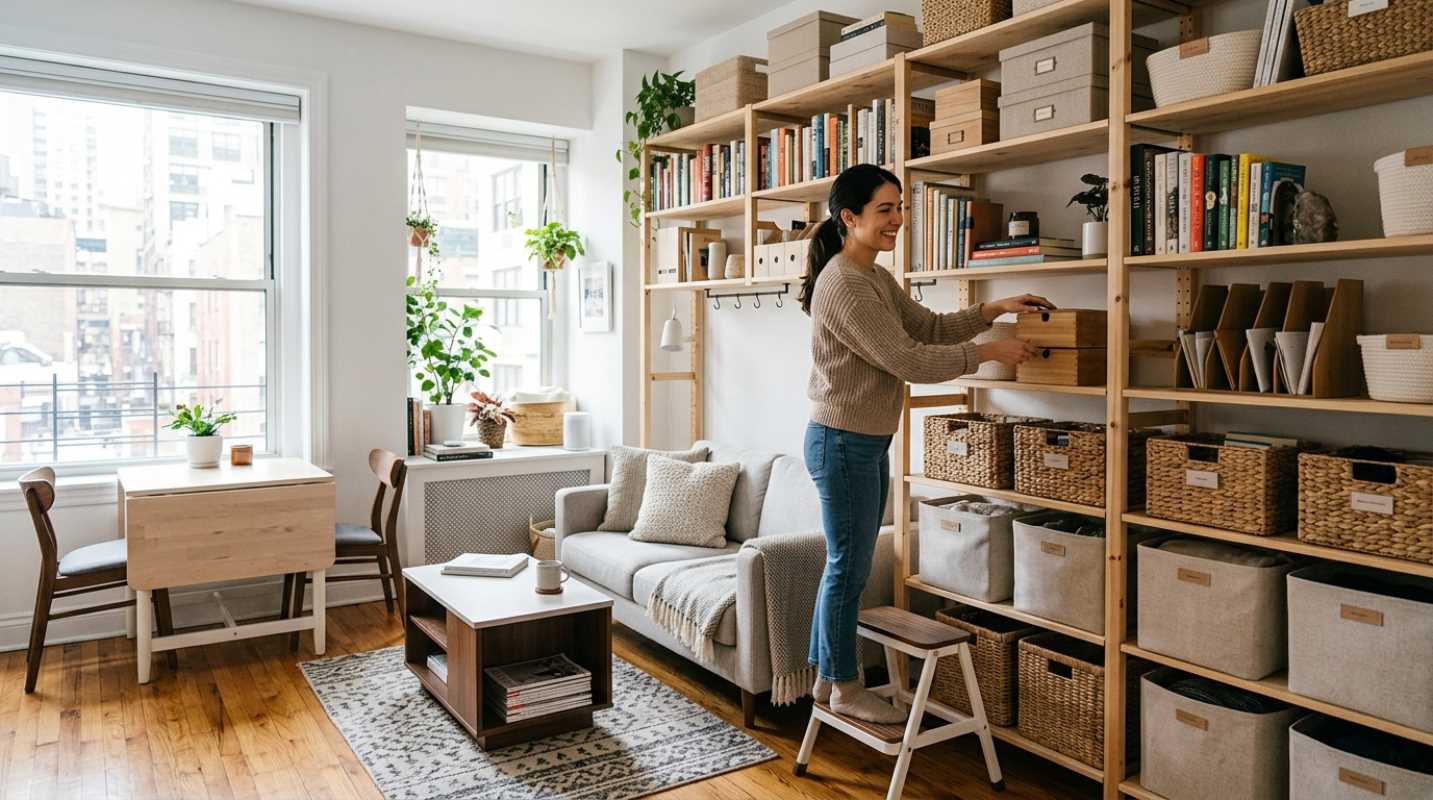
When you run out of floor space, where do you go? You go up. Most of us leave the top half of our rooms completely empty, which is a massive waste of prime real estate.
Start by swapping short, bulky bookcases for floor-to-ceiling cabinetry or wall-mounted shelving. This draws the eye upward, making your ceilings feel higher than they actually are.
Another great vertical option is the heavy-duty pegboard. Although you might associate pegboards with dusty garages, they are incredibly popular in modern, compact kitchens. Hanging your pots, pans, and utensils on a wall-mounted pegboard frees up a massive amount of cabinet space.
What about the backs of your doors? Over-the-door organizers are perfect for hiding away the small, daily items that usually clutter your flat surfaces. You can use them in the pantry for spices, in the closet for shoes, or in the bathroom for toiletries.
To keep all this vertical storage from looking like a crowded warehouse, you need to use a few visual tricks. Try matching the color of your storage bins to the color of your walls so they visually disappear. Also, leave about a quarter of every shelf empty. This gives the eye a place to rest and keeps the room feeling airy.
Multifunctional Furniture The Heavy Lifters of Small Spaces
In a small home, every single piece of furniture has to earn its keep. If a piece only does one job, it is taking up too much space.
Think about your bed. Instead of a standard frame, invest in a bed with built-in drawers underneath, or a modern Murphy bed that folds up into the wall during the day.
The same goes for your living area. A lift-top coffee table is a game-changer for studio apartments. The top lifts up and forward to become a desk or dining table, while the hollow base hides your laptop, board games, or blankets.
You can also look for modular sofas that feature built-in storage compartments inside the armrests or under the seat cushions. Why have a regular couch when you can have one that hides your winter blankets?
By choosing dual-purpose pieces, you eliminate the need for bulky standalone dressers and storage units. Your furniture does the heavy lifting, leaving you with more physical space to move around and breathe.
Hidden Gems Uncovering Underused Nooks
Every home has hidden pockets of space that are just waiting to be claimed. You just have to know where to look.
Take a close look at your kitchen and bathroom. Have you ever thought about using magnetic strips? A heavy-duty magnetic strip on the wall can hold your knives, spice jars, or even metal makeup containers, freeing up valuable drawer space.
Tension rods are another secret weapon. You can place them under your sink to hang spray bottles, or inside a cabinet to create vertical dividers for baking sheets and cutting boards.
Even dead corners can become functional zones. Here are a few creative ways to use those awkward spots
• Corner shelves: Corner shelves turn empty angles into display areas for books or plants.
• The toilet paper holder hack: Mount standard toilet paper holders in the kitchen to hold hand towels, or in closets to organize scarves and belts.
• Under-bed rolling bins: Under-bed rolling bins keep seasonal clothing completely out of sight but easily accessible.
If you live in a tiny home or a place with stairs, do not let that space go to waste. The void beneath a staircase can easily be converted into pull-out pantry drawers, a coat closet, or even a cozy pet nook.
The Decluttering Mindset Curating for Quality
You cannot organize your way out of a clutter problem. Before you buy a single storage bin, you have to purge.
It is easy to get sucked into the beautiful, color-coded organizing systems you see on social media. But professional organizers warn that these hyper-specific setups are almost impossible to maintain. When a system is too complicated, you will quickly revert to leaving things on the counter. Keep your systems simple and intuitive.
If you struggle with losing track of what is inside your storage bins, try a tech-savvy approach. You can use QR codes on your bins. A quick scan with your smartphone reveals exactly what is inside without you having to open a single lid.
To keep your home organized long-term, try implementing a strict one-in, one-out rule. If you buy a new sweater, an old one has to go.
This is not just about keeping a clean house. It is about your mental health. A survey showed that over 55% of homeowners believe an organized kitchen directly reduces their daily stress levels.³ Embracing a minimalist mindset keeps your home, and your mind, breathable.
Living Large in a Small Footprint
Making a small space work is all about intentional design. When you stop fighting your home's footprint and start working with it, everything changes.
Smart storage is not just a way to hide your stuff. It is an investment in your daily peace of mind and quality of life. You deserve a home that feels like a sanctuary, not a storage unit.
Start small. Pick one drawer, one closet, or one corner today. Keep your systems simple, think vertically, and watch your compact space transform into a place where you can truly thrive.
Sources:
1. Apartments are Shrinking
https://www.parealtors.org/blog/apartments-shrinking-heres-how-pa-measures-up/
2. Self-Storage Demand and Trends
https://www.pwc.com/us/en/industries/financial-services/asset-wealth-management/real-estate/emerging-trends-in-real-estate-pwc-uli/property-type-outlook/self-storage.html
3. Kitchen Clutter Survey Results
https://www.eaglewoodworking.com/blog/kitchen-clutter-survey-results